HOME Manchester launched the exhibition of the charity George House of Trust, “UK AIDS Memorial Quilts Trail”, taking place across Greater Manchester from November 25th to the World AIDS Day on December 1st.
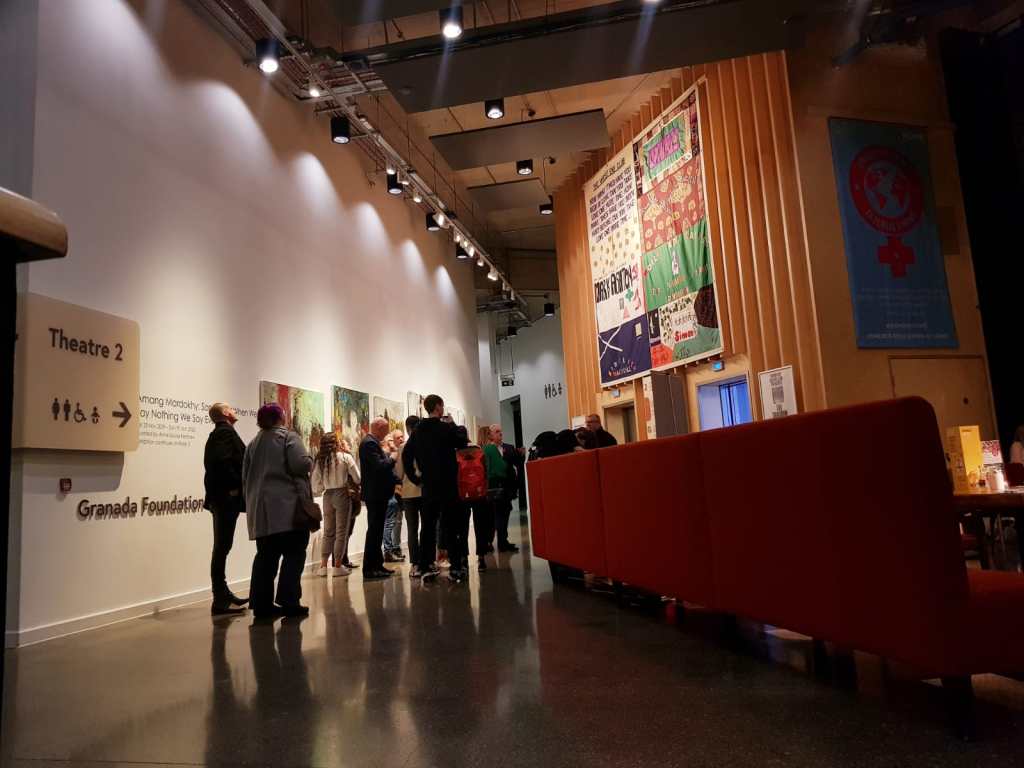
With the help of LGBT Foundation and BHA (Black Health Agency), the Mancunian charity curated the exhibition of quilts made by people who lost their loved ones during the early epidemic of HIV and related diseases in the 1980s and 1990s. For the first time, those commemorative pieces are displayed from November 25th to December 1st in fourteen different places across Greater Manchester “to remember that we never forget these people, but also to have a conversation about HIV now”, says Collin Armstead, one of the executive directors of the Mancunian charity George House of Trust.
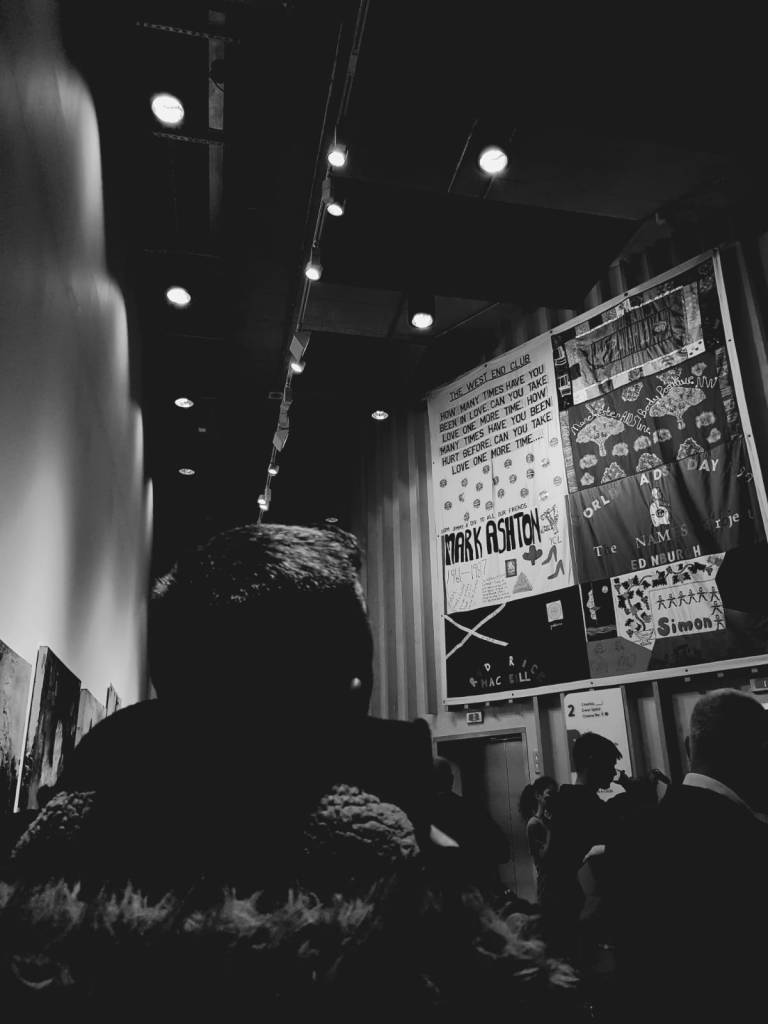
The concept of the quilts came from the United States in the 1980s and 1990s, and quickly spread to Europe, especially in the UK. Each panel is composed of eight quilts, and measures as a whole nearly four meters long and four meters wide. Fabric strips, decorative items, clothing were all sewed together by friend, lover, or family member of those early victims to create colourful commemorative multi-layered textiles. If some of them are personal and carries the name of their loved one, others commemorate idols like the artist Keith Haring, the iconic singer Freddy Mercury, or simply honour all the women or children that died in the early days of the epidemic.
The uniqueness of some pieces is emphasised by attached letters that recalls the unwavering love and absolute sadness the makers felt during the making process. Most of them are still unknown and might even not still be alive today. But surprisingly George House of Trust received a message from someone who recognised the panel of one of his brothers on an Instagram picture they published on the run up to the exhibition. The quilt under the name of “Andrew” is currently displayed at the Manchester’s Cathedral.
Although there is no cure to HIV yet, current medical treatments reduce the amount of the virus in a person’s blood making it undetectable by standards methods. That means the virus cannot be passed on and, as soon as the person takes is treatment regularly, the virus will have no effect on his body.
“I’ve been diagnosed with the HIV since there has been medication, so I’m alright”, says the poet Gerry Potter who performed three of his poems at the launch of the exhibition. “But I saw the first wave, and it was a nightmare, an absolute nightmare. I don’t think we can realise the trauma.”
In the meantime, stigma and discrimination about HIV and the related diseases are still a reality today within the society due to a lack of knowledge about the virus and its ways of transmission. “We mustn’t forget that the stigma around HIV still hasn’t gone away. It blights the lives of the people living with HIV because it isn’t necessarily taking a pill a day, it’s the fact that they are rejected by lovers, sexual partners, families, simply because they are living with the virus”, says Collin Armstead.
The charity George House of Trust is “supporting people living with HIV but also challenging stigmas and discrimination by educating people”, reminds Paul Fairweather, one of the six HIV activists who launched the charity in 1985.
Now that medication allows people who contract the virus to live almost normally, mentalities must evolve to completely shatter stigmas and discrimination around HIV and AIDS, and never forget those who suffered from it and wistfully passed away.
Inspired by the theme “Community Make the Difference” of the 2019 Global World AIDS Day, the “UK AIDS Memorial Quilt Trail” displays 15 of the 42 panels usually stored in London across five venues in Manchester, and nine boroughs across Greater Manchester. “We felt it was time to bring them out to remember people that we will never forget people who died in the very early days of HIV before medication became available,” says Collin Armstead.
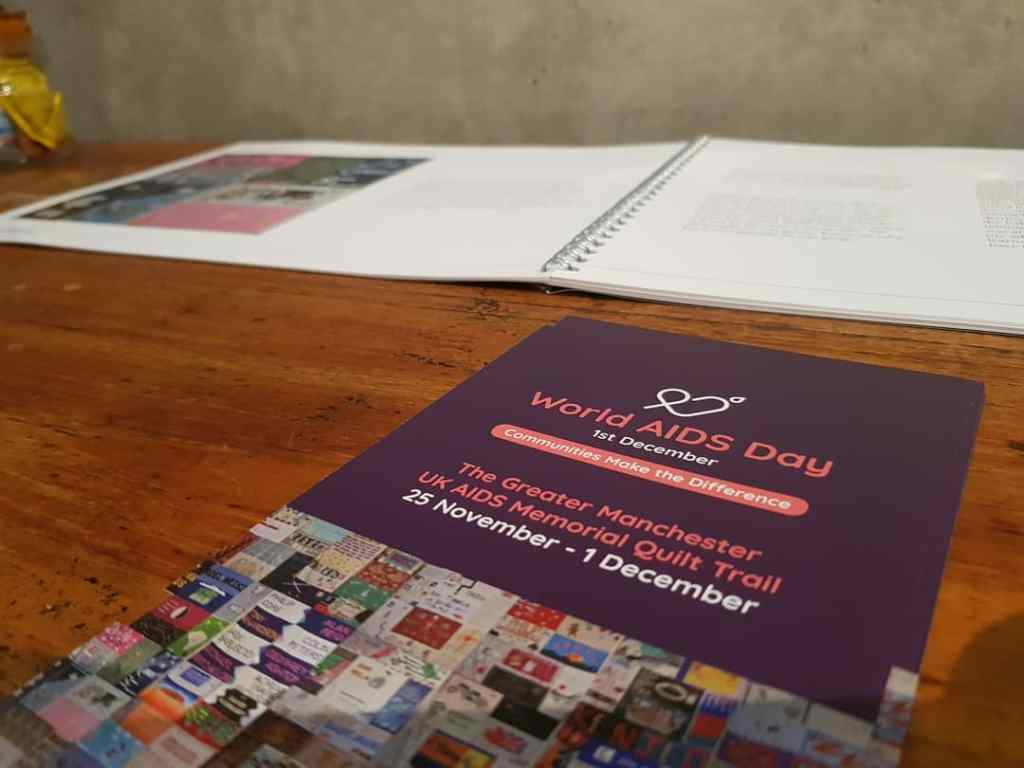
15 venues across Greater Manchester part of the exhibition “UK AIDS Memorial Quilt Trail”
Written by Johanna Gayraud
 'Art'-Loud